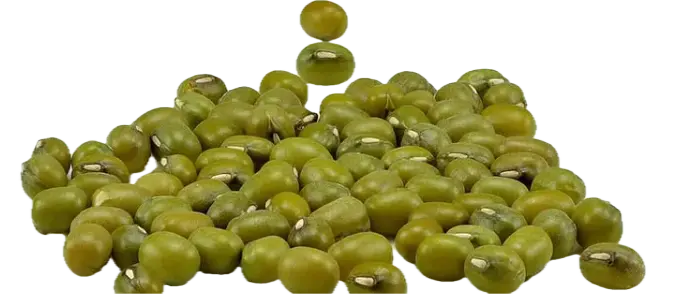
Mungbean | ASVR.0639
(Vigna radiata)
The mung bean is an annual legume of the Fabaceae (pea) family. It was domesticated on the Indian subcontinent and is now widely grown across tropical and subtropical Asia and beyond. Its seeds are rich in protein and minerals. In many cuisines it is a staple ingredient, from soups and dal to bean sprouts.
With its short growing cycle and ability to fix nitrogen, the mung bean also fits well in sustainable cropping systems. It works as a catch or rotation crop and leaves the soil richer in nitrogen.
Key characteristics
- Growth habit: erect, fast-growing herbaceous plant, typically 40–70 cm tall (depending on variety)
- Leaves: trifoliate and long-stalked, with bright green, ovate to lanceolate leaflets
- Flowering: pale yellow flowers in axillary racemes; predominantly self-pollinating
- Pods: slender and hairy, 5–10 cm long, with 10–15 seeds each; brown to black at maturity
- Seed: small, oval to cylindrical, usually green (depending on variety also yellow, brown or mottled)
- Crop cycle: short, approx. 60–90 days from sowing to harvest
- Nutritional value: approx. 20–25% protein; a source of iron, potassium, magnesium and folate
- Soil improvement: fixes atmospheric nitrogen through symbiosis with Bradyrhizobium bacteria in its root nodules
- Uses: dry beans, soups, dal, flour and bean sprouts
| Seed treatment: Untreated |